

Aesthetic Injectables · Regenerative Treatments
PRP for under-eyes, in Scottsdale & Phoenix
Platelet-rich plasma (PRP) at Xynwell is a regenerative treatment that uses your body's own platelets and growth factors to support healthier, brighter-looking under-eye skin. Rather than adding volume, PRP works by encouraging the skin's natural repair processes over time — offered selectively for patients whose concerns are primarily related to skin quality, fine lines, or certain types of dark circles.
What is PRP?
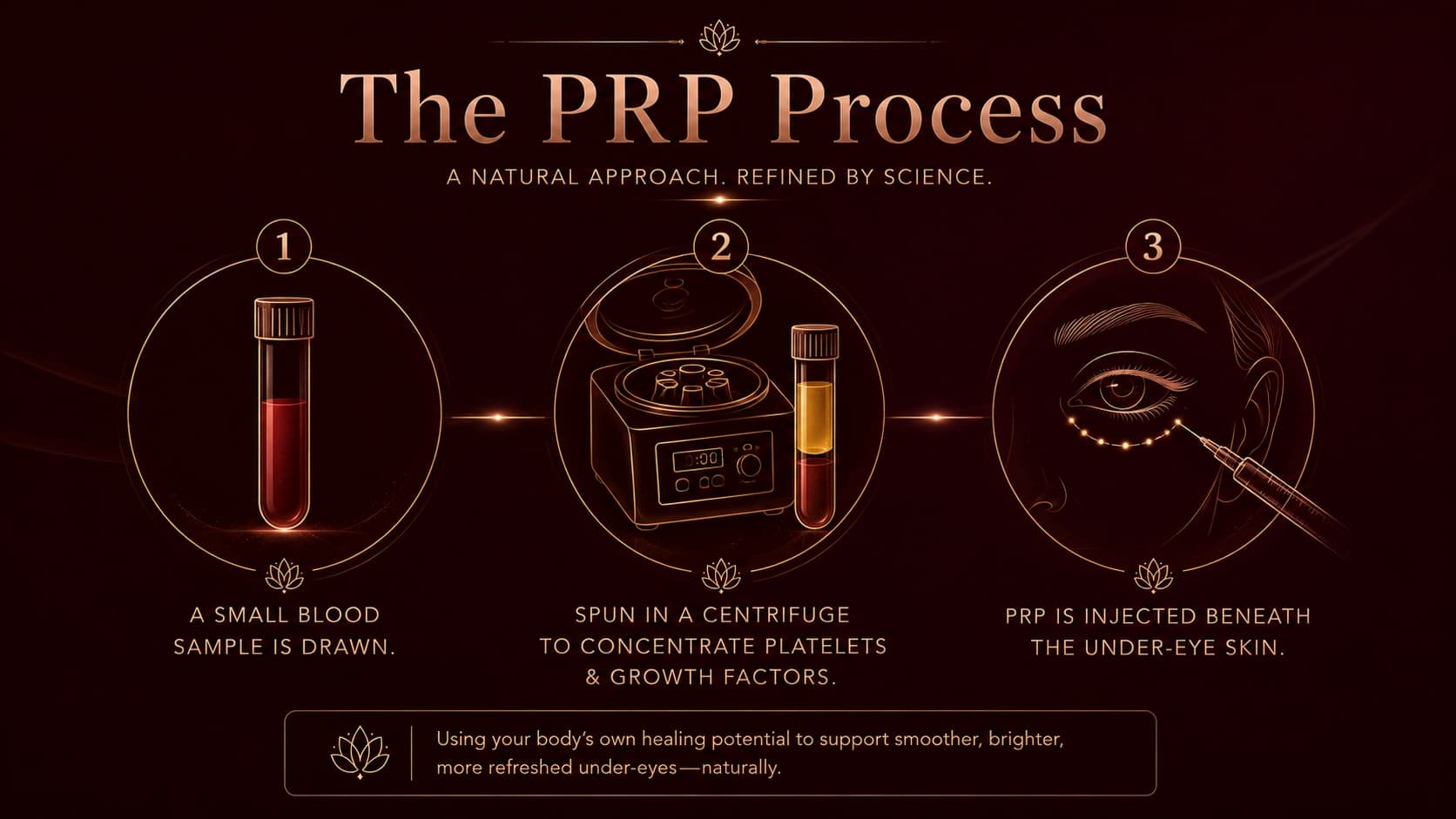
PRP stands for platelet-rich plasma. A small sample of your own blood is collected and processed in a centrifuge to concentrate platelets and naturally occurring growth factors. That platelet-rich plasma is then carefully injected beneath the skin around the eyes.
Because PRP comes entirely from your own blood, there is no synthetic filler or foreign material being placed into the body.
What can PRP improve?
PRP is designed to improve skin quality — not facial volume. Some patients notice gradual improvements in:
- Fine lines
- Skin texture
- Skin quality
- Mild crepiness
- Certain types of dark circles
- Overall skin brightness
PRP does not replace lost facial volume, and does not reposition fat or tighten significant skin laxity.
The Xynwell approach
Regeneration — not replacement
Every under-eye concern has a different cause. Some patients benefit most from hyaluronic acid filler; others achieve better results with lower blepharoplasty, laser resurfacing, or skin treatments. PRP occupies a different role altogether.
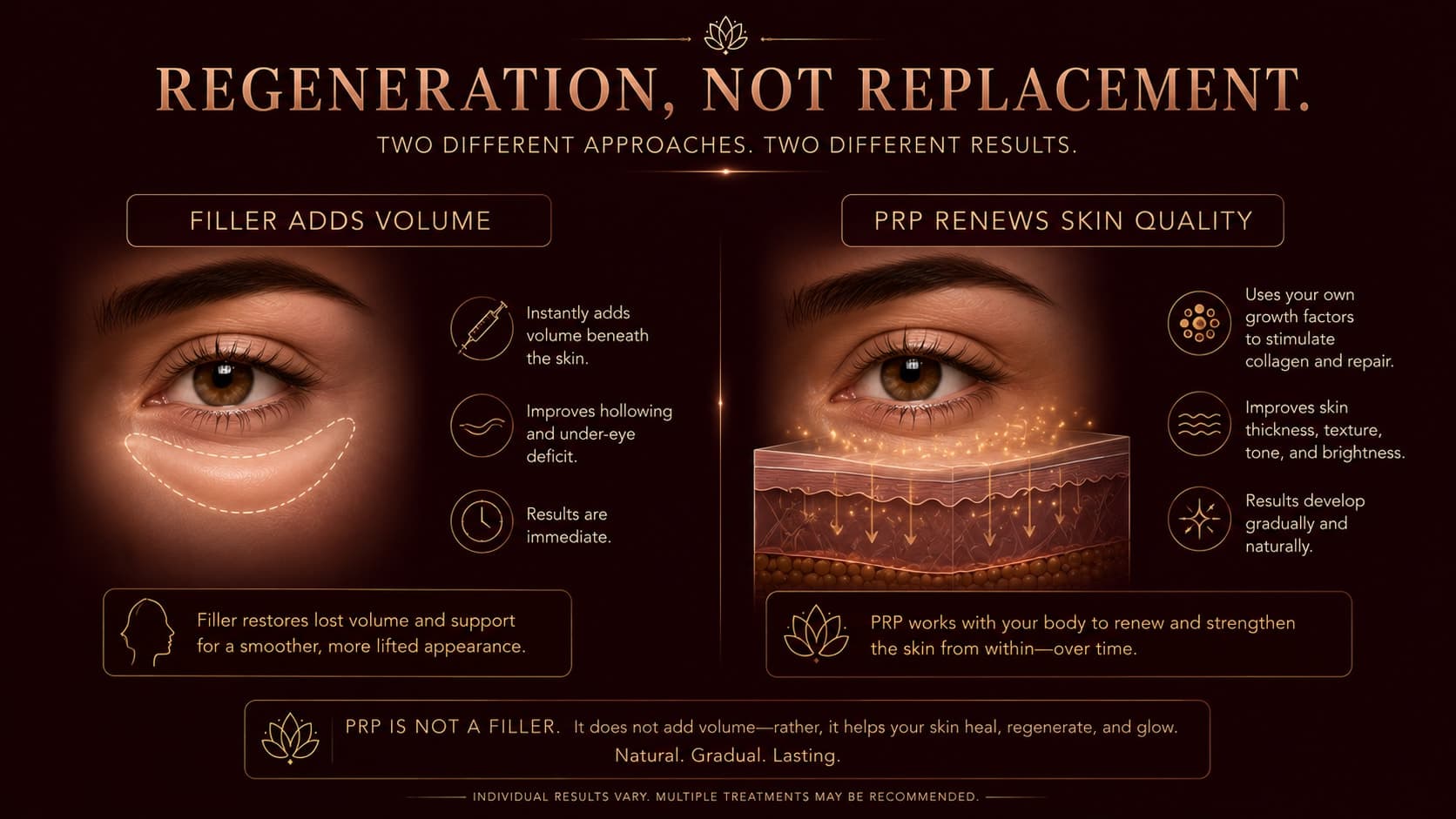
Rather than restoring volume, PRP supports healthier skin by using your body's own natural growth factors. For carefully selected patients, it can complement other treatments as part of a comprehensive under-eye rejuvenation plan — always based on your anatomy, concerns, and goals, not a single treatment for every patient.
What does the research show?
PRP remains one of the most actively studied regenerative treatments in aesthetic medicine. Current research suggests PRP may improve under-eye skin quality and certain types of dark circles in appropriately selected patients. However, results are gradual, individual, and less predictable than treatments such as hyaluronic acid filler.
While many patients experience meaningful improvement, PRP is best viewed as a regenerative treatment rather than an immediate cosmetic transformation.
Who is a good candidate?
PRP may be appropriate for
- Fine lines beneath the eyes
- Mild skin laxity
- Thin under-eye skin
- Certain pigment-related or vascular dark circles
- A preference for using their own natural tissue
Usually better addressed another way
- Significant tear trough hollowing
- Prominent under-eye bags
- Excess lower eyelid skin
- Seeking immediate or dramatic volume restoration

What to expect
Gradual, natural regeneration
Treatment begins with a small blood draw. While the platelet-rich plasma is being prepared, topical numbing cream is applied beneath the eyes; once processed, PRP is injected into the treatment area.
Most patients complete a series of three treatments about four to six weeks apart, with maintenance when desired. Because PRP stimulates gradual tissue remodeling, improvements develop progressively over the following weeks and months.
Frequently asked questions
Is PRP FDA-approved for cosmetic under-eye rejuvenation?
PRP is widely used in aesthetic medicine but is not specifically FDA-approved for cosmetic under-eye rejuvenation. The treatment uses your own blood, processed with FDA-cleared medical devices.
Can PRP replace tear trough filler?
No. PRP improves skin quality, while tear trough filler restores structural volume beneath the eyes. The best treatment depends on the cause of your under-eye concern.
How many treatments will I need?
Most patients undergo a series of three treatments spaced approximately four to six weeks apart before considering maintenance.
When will I see results?
PRP works gradually. Improvements typically become noticeable over several weeks and continue developing over the following months.
Is PRP safe?
Because PRP is prepared from your own blood, it has an excellent safety profile. Temporary redness, swelling, bruising, or tenderness at the injection sites are the most common side effects.

Schedule a Consultation
Support healthier under-eye skin with your body's own growth factors.
If you're interested in improving under-eye skin quality, fine lines, or dark circles, schedule a consultation to determine whether PRP is the right treatment for your anatomy and goals. Xynwell welcomes patients from Scottsdale, Paradise Valley, Phoenix, Arcadia, Fountain Hills, and throughout the Valley.