

Signature Procedure · Oculofacial Surgery
Ptosis repair, serving Scottsdale & the Valley
Ptosis repair at Xynwell restores the position of a drooping upper eyelid by improving the function of the muscle responsible for lifting it. Every procedure is carefully tailored to your anatomy, eyelid function, and goals — using the surgical technique best suited to your specific diagnosis.
Understanding ptosis
Ptosis is drooping of the upper eyelid itself — not simply excess skin. It occurs when the muscle responsible for lifting the eyelid becomes weakened or stretches over time, allowing the eyelid margin to sit lower than it should.
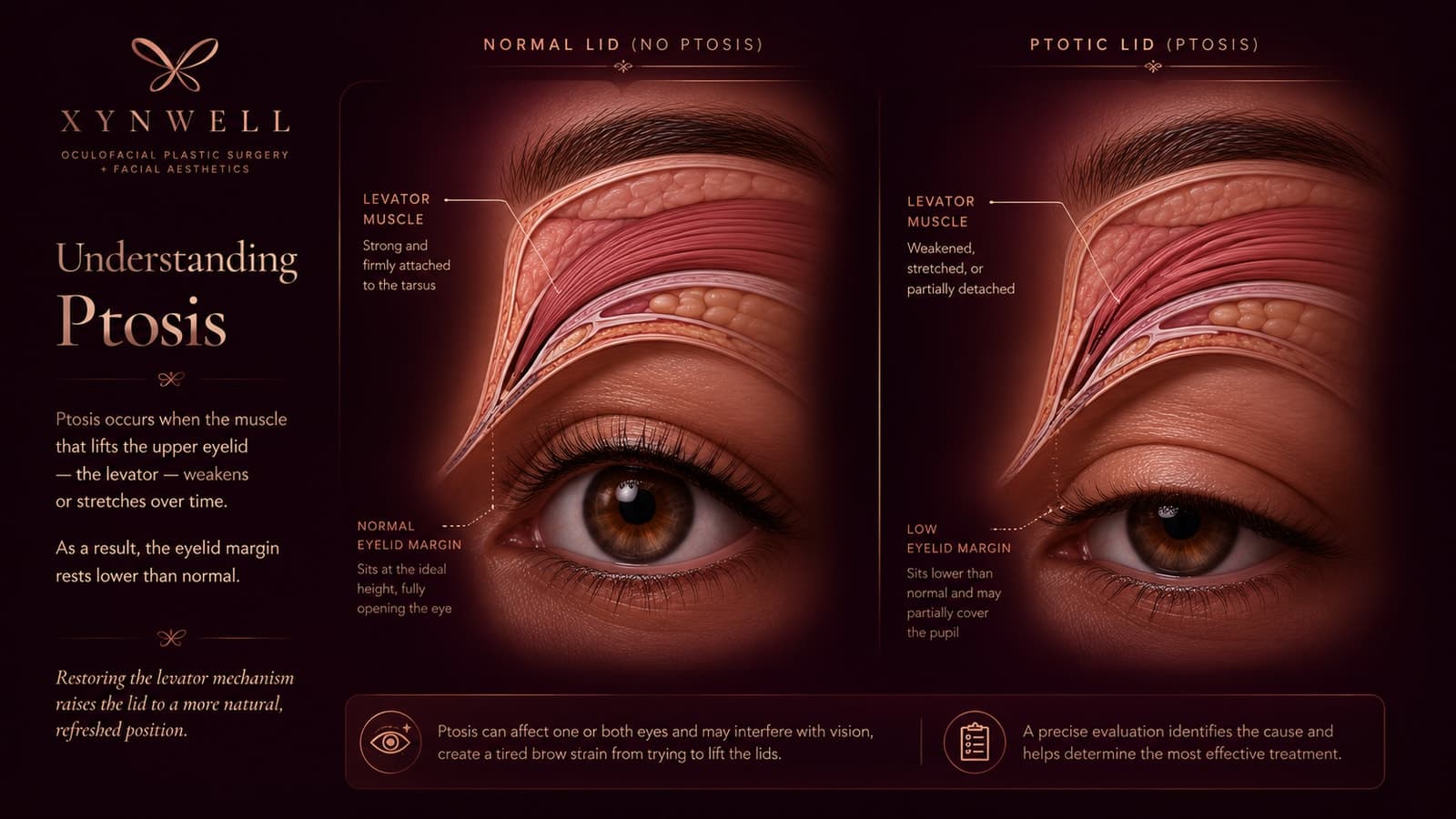
Two different conditions
Ptosis
A low eyelid margin
The lid itself sits too low because the lifting muscle has weakened. Ptosis repair restores the eyelid's position.
Dermatochalasis
Excess eyelid skin
Loose skin folds over the lid. Upper blepharoplasty removes the excess skin.
The two often occur together — and can be corrected in the same procedure when appropriate.
Q: What causes ptosis?
Ptosis most commonly develops as part of the natural aging process, when the eyelid's lifting mechanism gradually weakens. Less commonly, it relates to previous surgery, injury, neurological conditions, or congenital differences.
Who is a candidate?
Patients may benefit from ptosis repair if one or both upper eyelids sit noticeably lower than normal — creating a tired appearance, reducing the upper field of vision, or making it difficult to keep the eyes comfortably open.
Every consultation includes detailed measurements of eyelid position, muscle function, brow position, and facial symmetry. These findings determine whether ptosis repair, upper blepharoplasty, brow lift — or a combination of procedures — will provide the best outcome.
One of the most important parts of treatment is making the correct diagnosis. Excess skin, brow descent, and true ptosis can appear similar but require different surgical solutions.
The Xynwell approach
The right technique for your anatomy
Ptosis repair is customized to each patient's eyelid anatomy and muscle function. The approach is chosen based on careful measurements, eyelid function, facial balance, and long-term stability — never a one-size-fits-all technique.
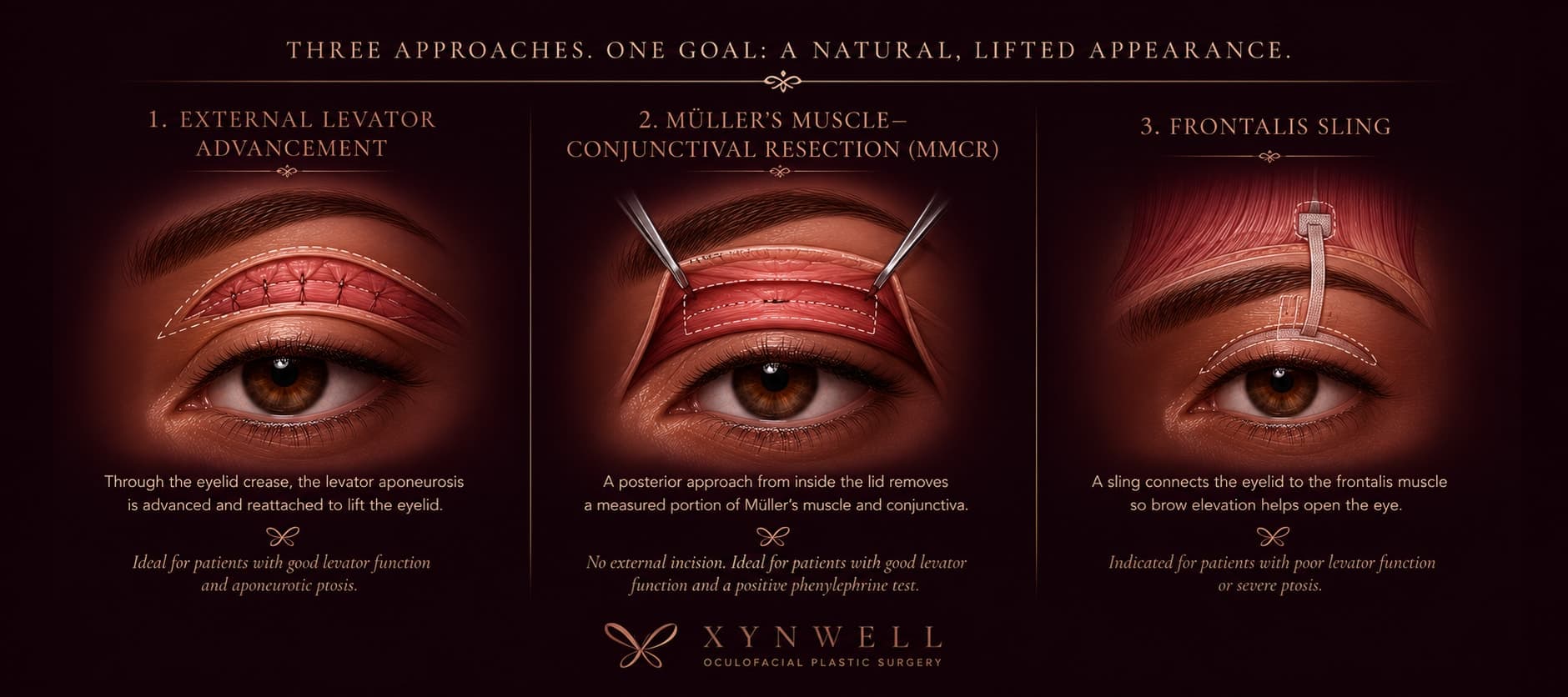
When appropriate, ptosis repair may be combined with upper blepharoplasty to address both eyelid position and excess skin in the same procedure.
Recovery and what to expect
Recovery following ptosis repair is similar to recovery after upper blepharoplasty. Lubricating eye drops, head elevation, and temporary activity restrictions help support healing.
- 1
First 1–2 weeks
Swelling and bruising are expected; lubricating drops, head elevation, and temporary activity limits support healing.
- 2
Following weeks
Eyelid position continues to refine and settle as swelling resolves.
- 3
Longer term
A natural, balanced eyelid position with comfortable closure and lasting symmetry.
Your recovery timeline and postoperative instructions are personalized based on your procedure and individual healing.

Results
Open, rested, and naturally balanced
Successful ptosis repair restores a more natural eyelid position while maintaining comfortable eyelid closure and facial symmetry. Patients often notice brighter, more open eyes, an improved upper visual field, and a more rested appearance. Results are generally long-lasting, although natural aging continues over time.
Individual longevity varies based on anatomy, healing, and the aging process.
Frequently asked questions
What is the difference between ptosis and excess eyelid skin?
Ptosis is drooping of the eyelid margin caused by weakness of the lifting muscle. Excess eyelid skin (dermatochalasis) is loose skin that folds over the eyelid. They often appear similar but require different treatments and may occur together. Learn more: Upper Blepharoplasty.
How much does ptosis repair cost?
Every treatment plan is individualized, so pricing is reviewed during your consultation after a detailed examination and discussion of your goals.
How is the surgical technique selected?
The appropriate procedure is determined by detailed measurements of eyelid position, muscle function, brow position, and overall facial anatomy. The treatment plan is individualized for each patient.
Can ptosis return after surgery?
Ptosis repair provides long-lasting improvement for most patients. As with any procedure, natural aging continues over time, and individual healing and longevity vary.
Can ptosis repair and upper blepharoplasty be performed together?
Yes. Because ptosis and excess upper-eyelid skin frequently occur together, many patients benefit from addressing both conditions during the same procedure. Your treatment plan is customized during consultation. Learn more: Upper Blepharoplasty.
Are there non-surgical treatments?
Some patients with mild acquired ptosis may benefit from prescription eye drops that temporarily stimulate the eyelid muscle. These treatments are not appropriate for every type of ptosis and do not replace surgery when a lasting correction is needed.

Schedule a Consultation
Understand the cause before choosing the treatment.
Every consultation begins with a detailed evaluation of your eyelid position, muscle function, brow position, and anatomy. From there, we'll recommend the treatment — or combination of treatments — that will provide the most natural, balanced result for you.