
Signature Procedure · Oculofacial Surgery
Upper blepharoplasty, serving Scottsdale & the Valley
Upper blepharoplasty at Xynwell is a specialized upper-eyelid procedure designed to reduce hooding, excess skin, and eyelid heaviness while creating a brighter, more refreshed appearance. Every procedure is thoughtfully tailored to your anatomy using conservative tissue management and a natural aesthetic approach.
What upper blepharoplasty addresses
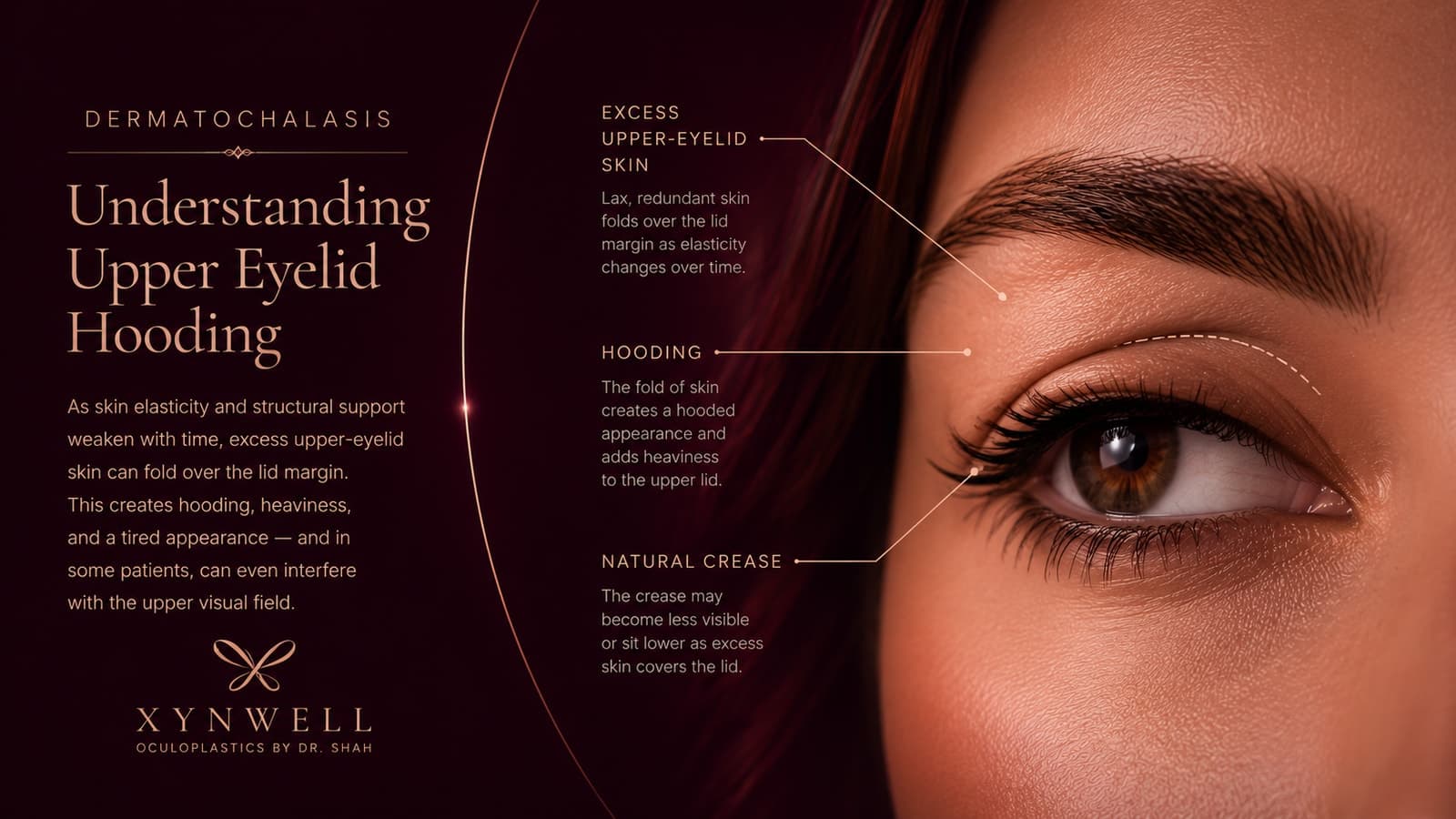
Upper blepharoplasty addresses excess upper-eyelid skin, hooding, and eyelid heaviness that naturally develop as skin elasticity changes over time. These changes can create a tired appearance and, in some patients, interfere with the upper visual field.
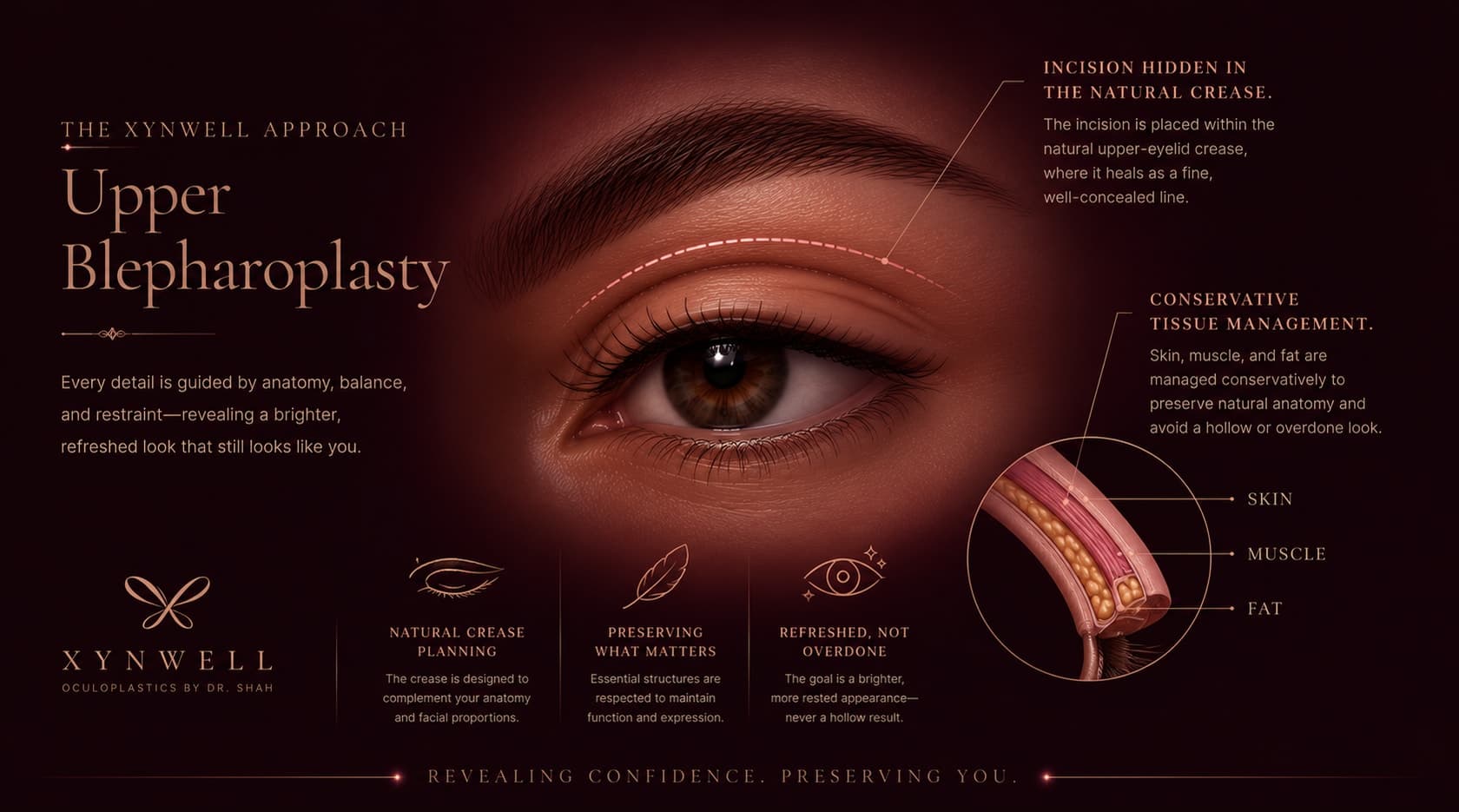
The procedure restores a cleaner upper-eyelid contour by carefully removing excess skin and, when appropriate, conservatively managing muscle or fat to preserve natural anatomy and avoid a hollow appearance.
What it improves
- Excess upper-eyelid skin
- Hooded upper eyelids
- Eyelid heaviness
- A tired or aged upper-eye appearance
Q: What does upper blepharoplasty treat?
Upper blepharoplasty improves excess upper-eyelid skin, hooded upper eyelids, eyelid heaviness, and a tired or aged upper-eye appearance by carefully removing excess skin and, when appropriate, conservatively managing muscle or fat.
Look-alikes, different fixes
Why diagnosis comes first
Hooding can come from three different sources — and each needs a different solution. Treatment is designed around the underlying anatomy, not simply the appearance.
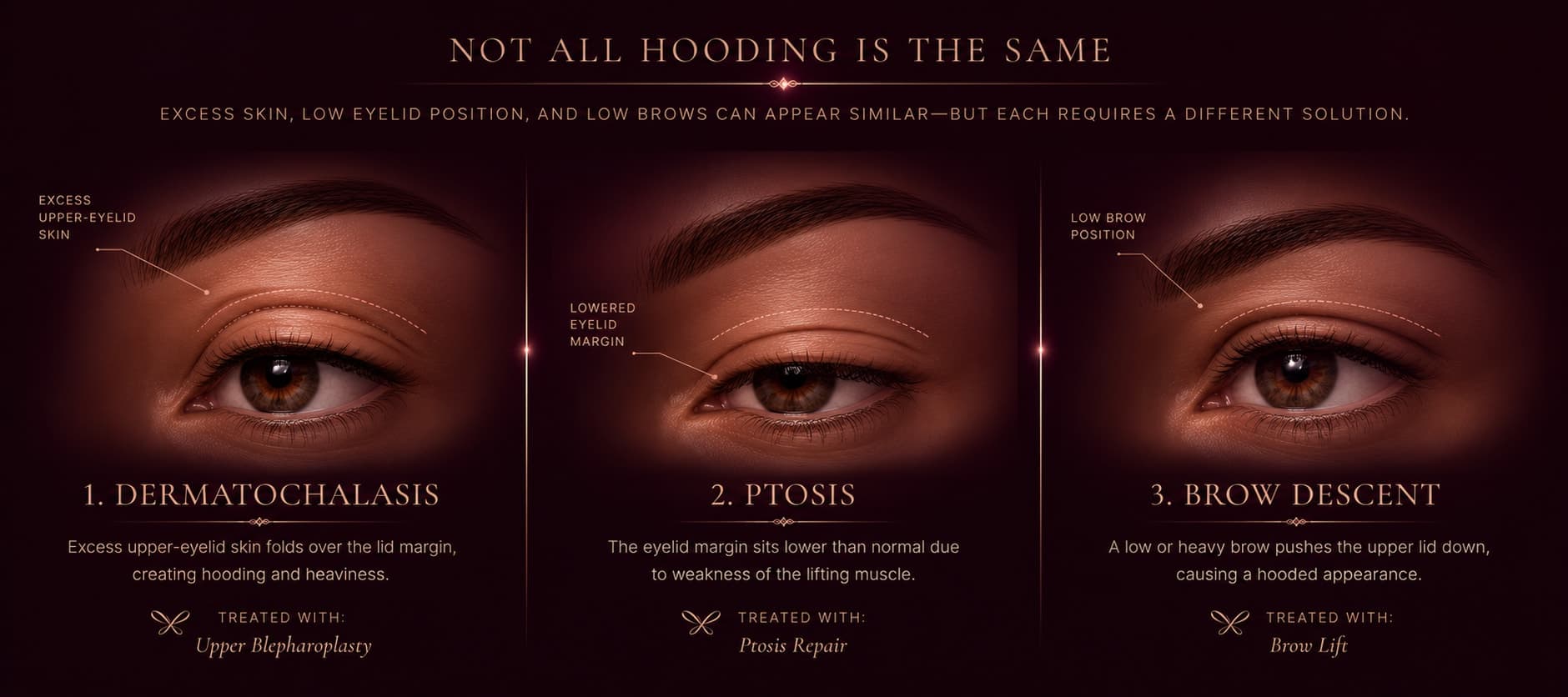
Treated, respectively, with upper blepharoplasty, ptosis repair, or a brow lift.
Who is a candidate?
Good candidates are adults bothered by excess upper-eyelid skin, persistent hooding, eyelid heaviness, or a tired appearance that does not improve with non-surgical treatment.
Every consultation includes an assessment of eyelid position, brow position, tear film, skin quality, and overall facial anatomy. These findings help determine whether upper blepharoplasty alone — or a combination procedure such as ptosis repair or brow lift — will provide the most natural, balanced result.
Careful diagnosis is one of the most important parts of treatment. Hooding from excess skin, eyelid ptosis, or brow descent may look alike but each requires a different surgical solution — which is why treatment is designed around the underlying anatomy.
Refined, well-concealed, conservative
Upper blepharoplasty is performed as an outpatient procedure under local anesthesia with or without monitored sedation. Every surgical plan is customized to your eyelid anatomy, brow position, skin quality, and facial balance.
Recovery and what to expect
Swelling and bruising are expected during the first one to two weeks. Lubricating eye drops, head elevation, and avoiding strenuous activity during early healing help optimize recovery.
- 1
About 1 week
Sutures are usually removed at the first postoperative visit.
- 2
10–14 days
Bruising and swelling improve and most patients return comfortably to public activities.
- 3
Weeks to months
Final refinement continues as swelling fully resolves and the incision matures into a fine line.
Your recovery timeline and postoperative instructions are personalized based on your procedure and individual healing.

Results & longevity
Brighter, more rested — never overdone
Upper blepharoplasty provides long-lasting improvement in eyelid contour, openness, and facial expression. Patients often look brighter, more rested, and refreshed without appearing overdone. Results commonly last for many years, although natural aging continues over time.
Individual longevity varies based on anatomy, skin quality, and the aging process.
Frequently asked questions
How much does upper blepharoplasty cost?
Because every patient's anatomy and treatment plan are unique, pricing is discussed during your consultation following a personalized evaluation. Xynwell is a cash-pay practice and does not bill insurance; you'll receive transparent recommendations and a detailed quote tailored to your goals.
What is the difference between dermatochalasis and ptosis?
Dermatochalasis is excess upper-eyelid skin. Ptosis is drooping of the eyelid itself caused by weakening of the muscle that lifts it. They often appear similar but require different treatments. During your consultation, the underlying cause is carefully evaluated so the most appropriate treatment can be recommended. Learn more: Ptosis Repair.
How long do results last?
Upper blepharoplasty provides long-lasting improvement. While natural aging continues, many patients enjoy results for years and often never require another procedure.
Will there be a visible scar?
The incision is carefully placed within the natural upper-eyelid crease, where it typically heals as a fine, inconspicuous line that continues to soften over time.
Can upper blepharoplasty be combined with other procedures?
Yes. Upper blepharoplasty is frequently combined with procedures such as ptosis repair, brow lift, or lower blepharoplasty when appropriate to create balanced facial rejuvenation.
What if I also have drooping of the eyelid margin, not just excess skin?
That may be ptosis — a separate condition from excess upper-eyelid skin. Ptosis requires correction of the muscle that lifts the eyelid rather than skin removal alone. During your consultation, the underlying cause is carefully evaluated so the appropriate treatment can be recommended. Learn more: Ptosis Repair.

Schedule a Consultation
See whether upper blepharoplasty is right for you.
Every plan begins with a personalized evaluation of your eyelid anatomy, brow position, and goals. Serving Scottsdale, Paradise Valley, and the Valley.