

Reconstructive Eyelid Surgery · Oculofacial Surgery
Ectropion repair, in Scottsdale & Phoenix
Ectropion repair at Xynwell restores the normal position of an outward-turning lower eyelid to relieve tearing, irritation, and exposure. Dr. Ami Shah, a fellowship-trained, ABO board-certified oculofacial plastic surgeon, performs ectropion repair with techniques tailored to the underlying cause of your condition.
What ectropion is and why it happens
Ectropion occurs when the lower eyelid turns outward and no longer rests against the eye. This commonly develops with age as the eyelid support structures gradually loosen, but it can also result from scarring, previous surgery, facial nerve weakness, or other conditions.
Because the eyelid no longer protects the eye or positions the tear duct correctly, patients often experience excessive tearing, irritation, redness, dryness, and discomfort.
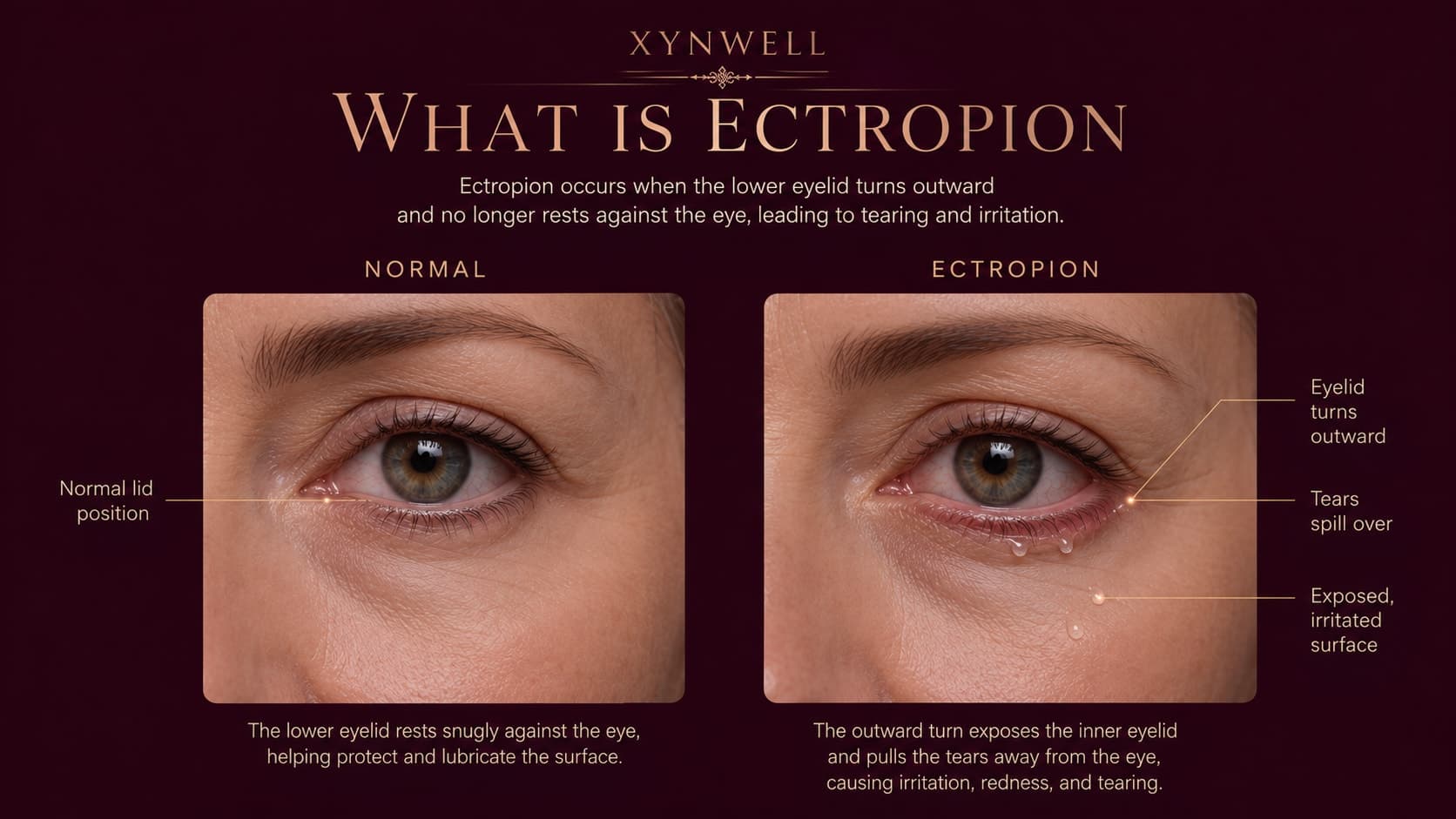
Q: Why does my lower eyelid droop away from my eye and water constantly?
An outward-turning lower eyelid is often caused by ectropion. As the eyelid loses contact with the eye, tears no longer drain properly and instead spill down the cheek.
The Xynwell approach
Restoring the eyelid to its natural position
Most ectropion is repaired by tightening and repositioning the lower eyelid so it once again rests comfortably against the eye. The exact technique depends on the underlying cause. Age-related laxity is commonly corrected with a lateral tarsal strip procedure, while scarring or facial nerve weakness may require additional reconstructive techniques.
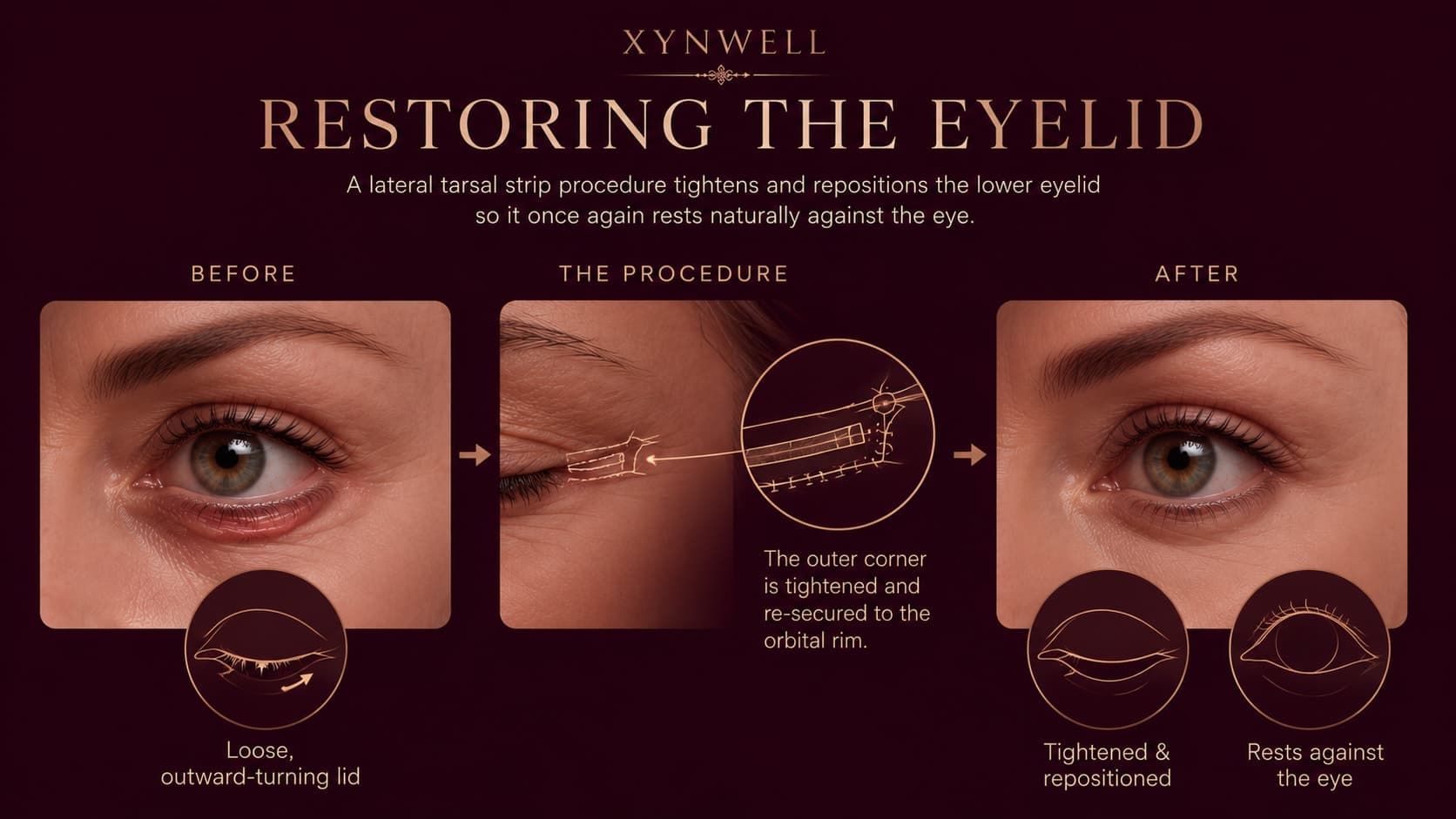
Every evaluation begins with understanding why the eyelid has turned outward. The eyelid, tear drainage system, and ocular surface are carefully examined so the repair is tailored to the underlying problem rather than simply treating the symptoms. Surgery is typically performed as an outpatient procedure under local anesthesia, with or without light sedation.
If your eyelid turns inward rather than outward, see our entropion repair page for information about that separate condition.

Recovery & results
Comfortable, protected, and clear
Recovery is generally straightforward. Mild bruising and swelling are expected during the first one to two weeks, and patients use ointment on the incision while temporarily avoiding strenuous activity. Dr. Shah monitors healing closely to ensure the eyelid returns to its proper position.
Most patients experience significant improvement in tearing, irritation, and eye comfort as healing progresses.
Frequently asked questions
How much does ectropion repair cost at Xynwell?
Xynwell is a private, cash-pay practice. The cost of ectropion repair is determined after your examination and depends on the surgical plan recommended by Dr. Shah.
What causes the eyelid to turn outward?
The most common cause is age-related loosening of the tissues that support the lower eyelid. Less commonly, scarring, previous surgery, skin tightening, or facial nerve weakness can cause the eyelid to pull away from the eye. Identifying the underlying cause helps determine the appropriate repair.
Will untreated ectropion damage my eye?
It can. Because the eyelid no longer protects the surface of the eye, untreated ectropion may lead to chronic irritation, dryness, redness, excessive tearing, and, in more advanced cases, damage to the cornea. Early evaluation can help prevent these complications.
What is recovery like after ectropion repair?
Most patients experience mild bruising and swelling for one to two weeks before gradually returning to normal activities. Dr. Shah provides detailed postoperative instructions and follows your healing to ensure the eyelid is recovering properly.
Can ectropion come back after surgery?
Ectropion repair is durable for most patients. However, because the tissues naturally continue to age over time, some individuals may develop recurrent eyelid laxity years later. If symptoms return, Dr. Shah can evaluate whether additional treatment is appropriate.

Schedule a Consultation
Relieve persistent tearing, irritation, and eye discomfort.
If your lower eyelid turns outward or you experience persistent tearing, irritation, or eye discomfort, schedule a consultation to determine whether ectropion repair is right for you. Xynwell welcomes patients from Scottsdale, Paradise Valley, Phoenix, Arcadia, Fountain Hills, and throughout the Valley.