

Orbital Surgery · Thyroid Eye Disease
Orbital decompression, in Scottsdale & Phoenix
Orbital decompression is a reconstructive procedure for thyroid eye disease that creates additional space within the eye socket, allowing the eyes to settle into a more natural position. Treatment plans are individualized based on your examination, imaging, symptoms, and goals, with a clear discussion of the procedure's limitations and recovery.
Understanding thyroid eye disease
Thyroid eye disease (TED) is an autoimmune condition that causes the muscles and fatty tissues behind the eye to become enlarged and inflamed. Because the eye socket is enclosed by bone, this extra tissue has nowhere to expand, often pushing the eye forward.
As the eyes become more prominent, patients may experience dryness, irritation, incomplete eyelid closure, pressure, double vision, or changes in appearance. In more severe cases, increased pressure within the orbit can affect the optic nerve and threaten vision.
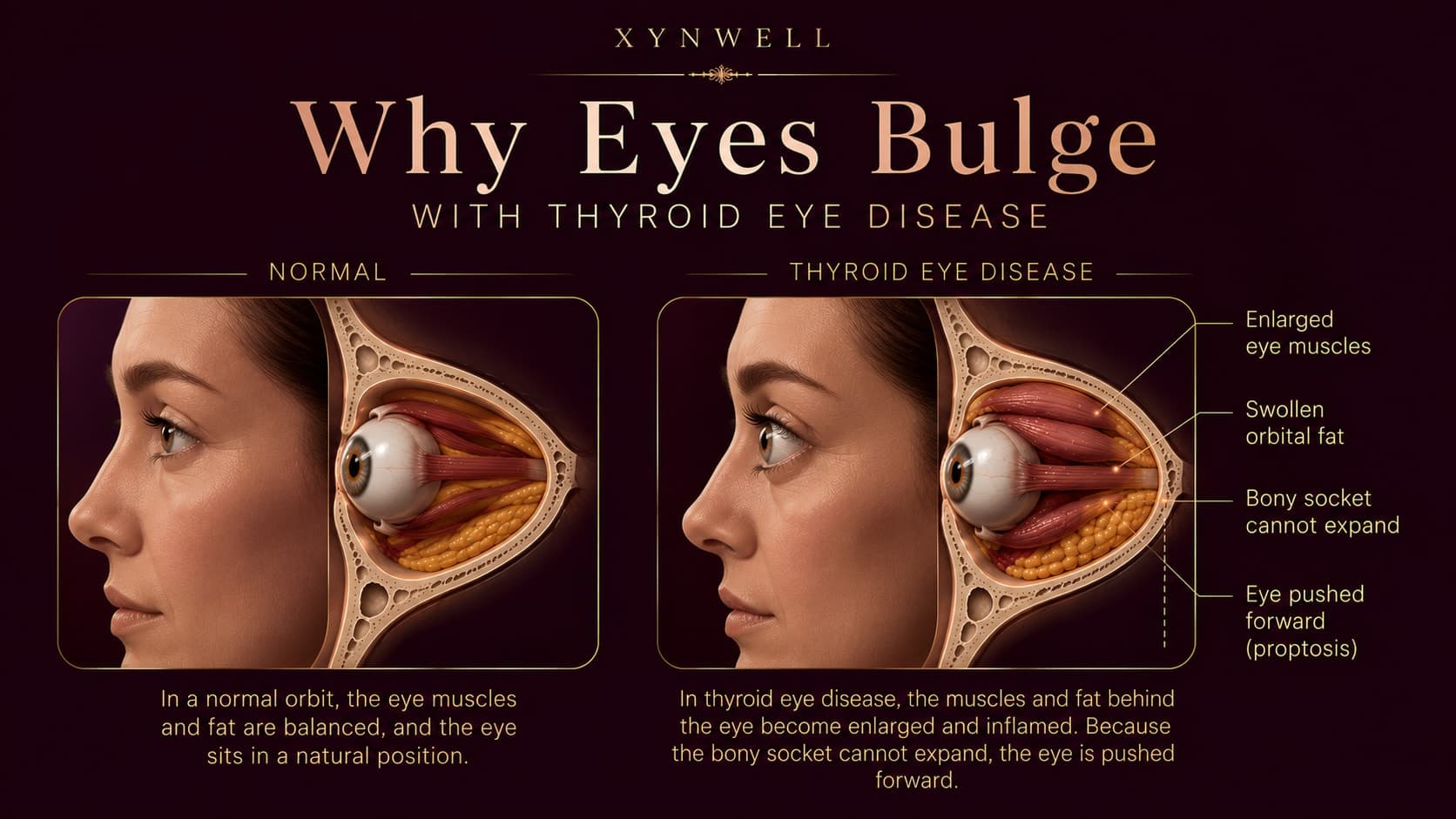
Q: Why do the eyes bulge with thyroid eye disease?
The eye itself does not grow larger. Instead, inflammation causes the muscles and fat behind the eye to enlarge, pushing the eye forward within the confined space of the orbit.
The Xynwell approach
Restoring space within the orbit
Every patient with thyroid eye disease is different. Treatment begins with understanding the activity and severity of the disease, your symptoms, imaging findings, and your long-term goals before recommending surgery.
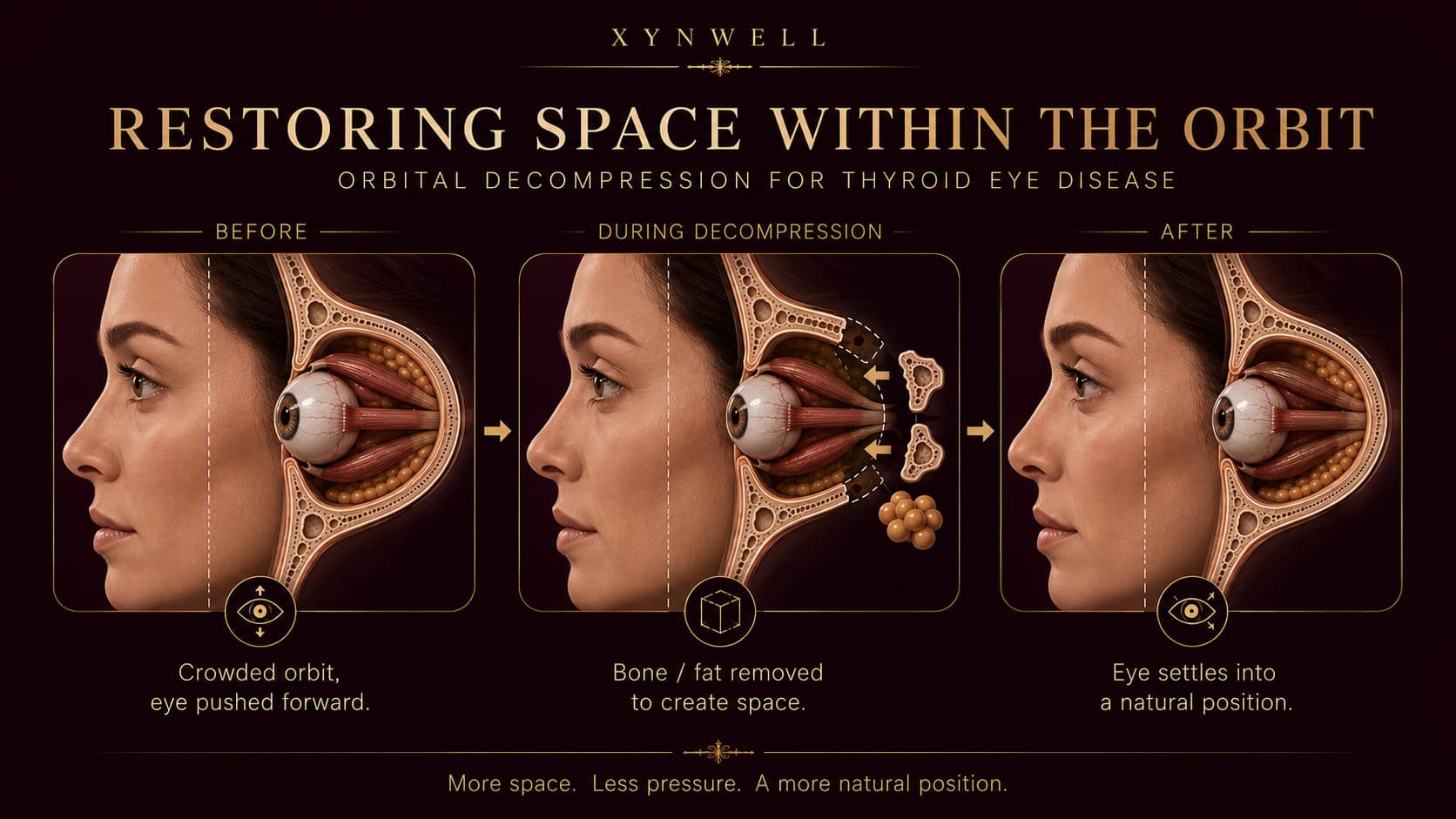
When orbital decompression is appropriate, carefully selected portions of the orbital bone — and, when indicated, orbital fat — are removed through concealed incisions to safely create additional space around the eye. The extent of surgery is individualized based on the amount of eye prominence, orbital anatomy, and whether vision is at risk.
Timing
When surgery is performed
For most patients, orbital decompression is performed after thyroid eye disease has stabilized. In vision-threatening cases involving optic nerve compression, surgery may be recommended more urgently.
A staged approach
Often the first step
Orbital decompression is often the first stage of thyroid eye disease rehabilitation. Additional eyelid or repositioning procedures may be recommended after healing is complete to achieve the best overall result.

Recovery & results
Settling into a natural position
Recovery involves noticeable swelling and bruising during the first several weeks, followed by gradual improvement over the coming months as the tissues heal and the eye position stabilizes. Temporary activity restrictions are expected during early recovery.
Because thyroid eye disease rehabilitation is frequently performed in stages, additional procedures may be planned only after the eyes have fully settled. Follow-up visits monitor healing and help determine whether further treatment would be beneficial.
Frequently asked questions
How much does orbital decompression cost at Xynwell?
Xynwell is a private, cash-pay practice. The cost of orbital decompression depends on your examination, imaging findings, and individualized surgical plan and is reviewed during your consultation.
When is the right time to have orbital decompression?
For most patients, surgery is recommended after thyroid eye disease has stabilized. Operating once inflammation has settled generally leads to more predictable results. The primary exception is vision-threatening compression of the optic nerve, which may require more urgent treatment.
Will orbital decompression fix my eyelids too?
Not usually. Orbital decompression addresses the position of the eye within the orbit. If thyroid eye disease has also affected the eyelids, additional eyelid procedures may be recommended after healing is complete.
What are the risks of orbital decompression?
As with any orbital surgery, risks include double vision, numbness of the cheek or upper teeth, bleeding, infection, sinus-related issues, and, rarely, vision loss. Your individual risk profile depends on your anatomy and surgical plan and is reviewed thoroughly during consultation.
What is recovery like after orbital decompression?
Most patients experience significant swelling and bruising during the first several weeks. The eyes continue to settle gradually over the following months, and follow-up visits monitor healing while determining whether additional staged procedures are appropriate.

Schedule a Consultation
Relieve pressure, protect vision, and restore a natural eye position.
If thyroid eye disease has changed the position, comfort, or appearance of your eyes, schedule a consultation to determine whether orbital decompression or another treatment may be appropriate. Xynwell welcomes patients from Scottsdale, Paradise Valley, Phoenix, Arcadia, Fountain Hills, and throughout the Valley.