

Procedure · Eyelid Lesions
Eyelid lumps & bumps, serving Scottsdale & the Valley
Xynwell evaluates and treats a wide range of eyelid lumps and bumps — chalazia, xanthelasma, cysts, papillomas, skin tags, and other benign lesions. Every lesion is evaluated individually, because while most are harmless, some require additional investigation before removal.
Not every eyelid lump is the same
Most eyelid lesions are benign and can be safely removed in the office. Others may require biopsy or referral before treatment — so at Xynwell, every lesion is assessed individually before any treatment recommendation is made.
Have any growth professionally evaluated if it…
- Changes in size, shape, or color
- Bleeds, crusts, or ulcerates
- Repeatedly returns in the same spot

Why an eyelid specialist
The most delicate area of the face
The eyelid is the thinnest, most delicate region of the face. Successful removal is more than taking out a growth — it means preserving eyelid function, protecting the eye, and minimizing visible scarring. Every procedure is planned with both function and appearance in mind.
Common eyelid lesions
A quick guide to the lesions seen most often — though every case is evaluated individually.
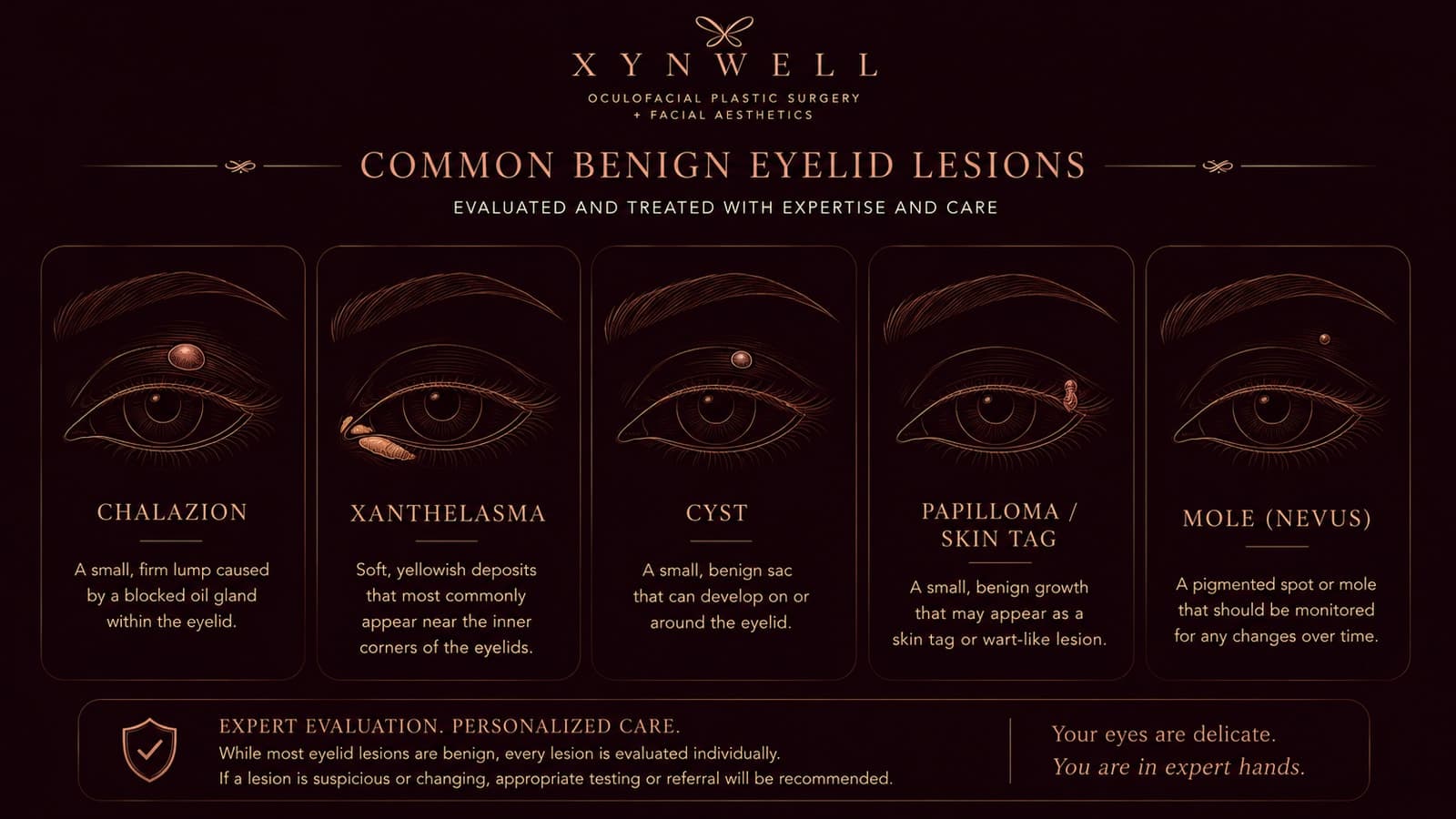

Chalazion
A blocked oil gland that creates a firm, usually painless lump. Many improve with warm compresses; persistent ones may be treated with a steroid injection or a minor procedure through the inside of the lid — leaving no visible external scar.
Xanthelasma
Soft yellow cholesterol deposits near the inner corners of the eyelids. Benign, but they don't resolve on their own and can be removed for cosmetic reasons. Because they can relate to cholesterol, medical evaluation may be advised.
Eyelid cysts
Several types of cyst can develop around the eyelids. Most are benign and easily removed in the office when they enlarge, become bothersome, or affect comfort or appearance.
Papillomas & skin tags
Small benign growths that commonly develop with age — usually removed comfortably during a brief office procedure.
Moles (nevi)
Most eyelid moles are harmless. But any mole that changes in appearance, bleeds, becomes irritated, or grows should be evaluated promptly.
The Xynwell approach
How eyelid lesions are removed
Most eyelid lesions are removed comfortably in the office. Recovery is generally straightforward — mild swelling or bruising for a few days, then back to normal activities.
01
In-office, under local
Most lesions are removed comfortably in the office using local anesthesia around the eyelid.
02
Tailored to the lesion
Careful excision, drainage, or other minimally invasive techniques — chosen to preserve normal eyelid anatomy and minimize visible scarring.
03
Pathology when appropriate
When indicated, tissue is submitted for pathological evaluation to confirm the diagnosis.
Recovery and what to expect
Recovery depends on the size and location of the lesion. Postoperative instructions are individualized based on the procedure performed.
- 1
First few days
Mild swelling or bruising is common; most patients return to normal activities shortly afterward.
- 2
1–2 weeks
When sutures are required, they are typically removed within one to two weeks.
- 3
Individualized
Postoperative instructions are tailored to the size, location, and type of lesion treated.
Frequently asked questions
Is every eyelid lump benign?
No. Most eyelid lesions are benign, but some require additional evaluation. Every lesion is examined individually before treatment recommendations are made.
Does a chalazion always require surgery?
No. Many improve with warm compresses or conservative treatment. Surgery is generally reserved for lesions that persist or repeatedly return.
Will removal leave a scar?
Whenever possible, incisions are placed in natural eyelid folds or hidden locations to minimize visible scarring. The approach depends on the type and location of the lesion.
What happens if the lesion comes back?
Some lesions have a higher likelihood of recurrence than others. If a lesion repeatedly returns — particularly in the same location — additional evaluation may be recommended before further treatment.
Schedule a Consultation
Have it evaluated before deciding on treatment.
Every consultation begins with a careful examination to determine exactly what the lesion is and whether treatment is recommended. When removal is appropriate, the procedure is designed to preserve eyelid function while achieving the best possible cosmetic outcome.