
Signature Procedure · Oculofacial Surgery
Lower blepharoplasty, serving Scottsdale & the Valley
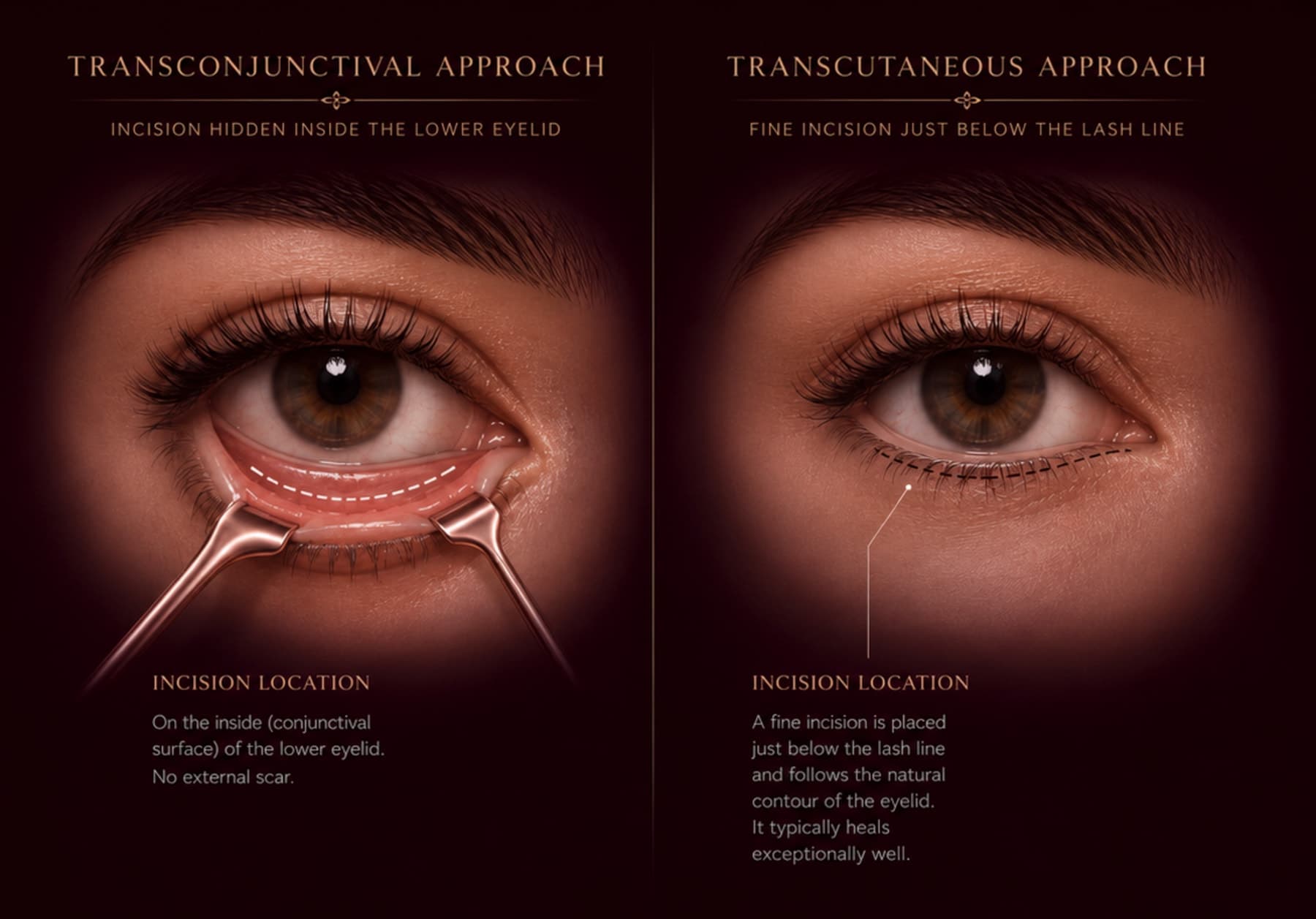
Lower blepharoplasty at Xynwell is a specialized lower-eyelid procedure designed to reduce under-eye bags, puffiness, and lower-eyelid laxity while restoring a smoother, more refreshed appearance. Each procedure is thoughtfully tailored to your anatomy — using either a transconjunctival or transcutaneous approach — depending on the underlying cause and the result you're after.
What lower blepharoplasty addresses
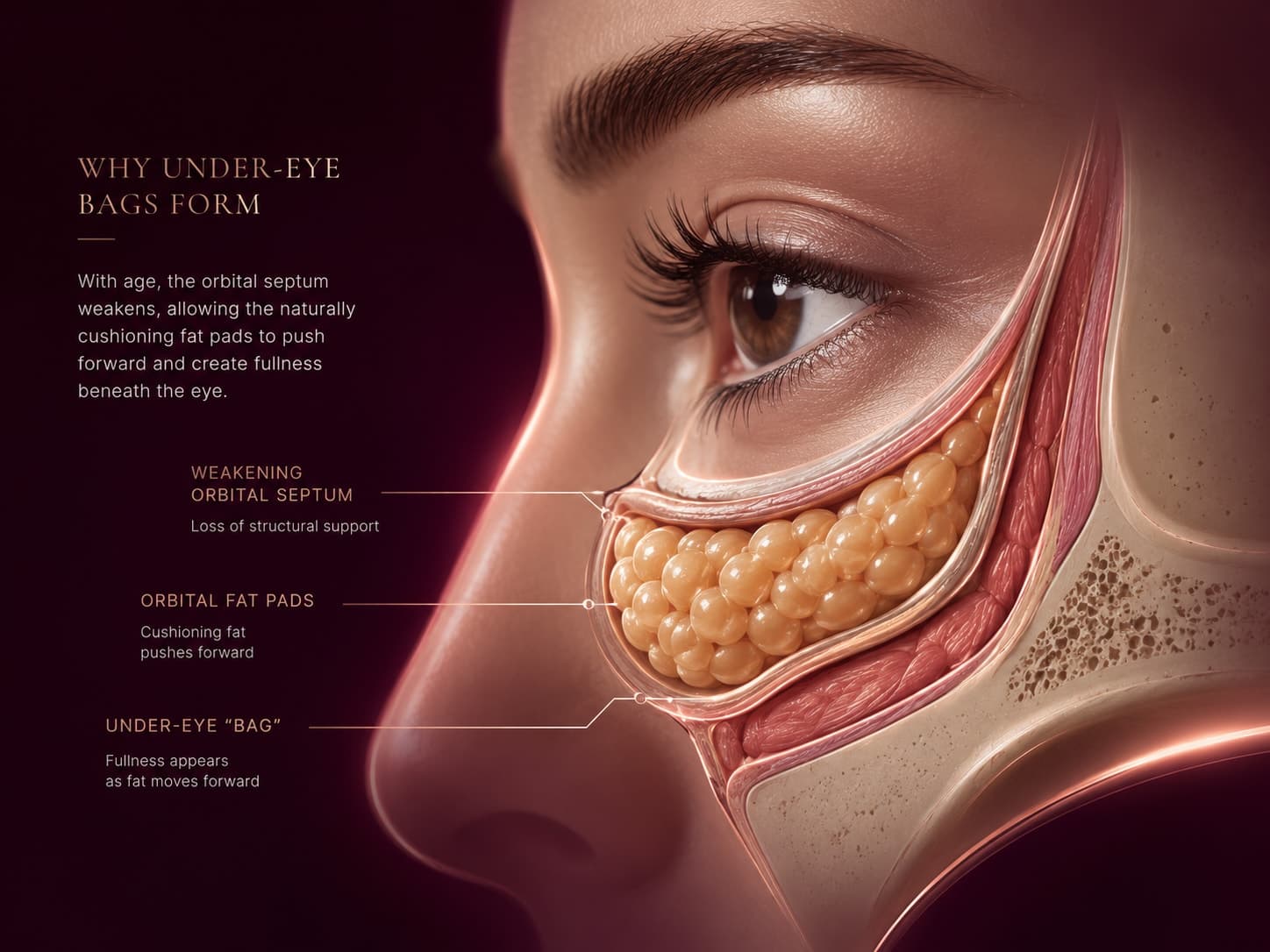
Lower blepharoplasty treats under-eye bags, puffiness, and lower-eyelid laxity caused by changes in the tissues that support the lower eyelid. Over time, the structures that hold orbital fat in place weaken, allowing fat to become more prominent beneath the eyes and creating a tired or puffy appearance.
What it improves
- Under-eye bags
- Lower-eyelid puffiness
- Excess or lax lower-eyelid skin (when present)
- The transition between the lower eyelid and upper cheek
Q: What does lower blepharoplasty treat?
Lower blepharoplasty improves under-eye bags, lower-eyelid puffiness, excess or lax lower-eyelid skin, and the transition between the lower eyelid and upper cheek by repositioning or reducing herniated orbital fat and, when needed, tightening lower-eyelid skin.
Two different tools
Camouflage, or correct the cause
Tear trough filler
Restores volume to camouflage hollowness
A non-surgical option that softens shadowing by adding volume — ideal when the concern is hollowness rather than herniated fat.
Lower blepharoplasty
Addresses the anatomical cause
Repositions or reduces the herniated fat itself for a smoother lid-cheek contour and a result that lasts.
Not sure which fits your concern? Tear Trough Filler vs. Lower Blepharoplasty
Who is a candidate?
Good candidates are generally healthy adults bothered by persistent under-eye bags or puffiness that do not improve with skincare, sleep, or non-surgical treatments.
Whether lower blepharoplasty is appropriate depends on the cause of your concerns. Fat herniation often responds well to surgery, while volume loss, pigmentation, or skin-quality concerns may be better addressed with other treatments or a combination approach.
Every consultation includes a careful evaluation of eyelid anatomy, skin quality, facial balance, and lower-eyelid support — so the recommendation is the safest, most natural, and longest-lasting result for you.
The Xynwell approach
One procedure, two precise approaches
Every lower blepharoplasty begins with an individualized treatment plan. The approach is selected based on eyelid anatomy, skin quality, facial balance, and long-term support of the lower eyelid — never a one-size-fits-all technique.
Recovery and what to expect
Swelling and bruising are expected during the first one to two weeks, with swelling typically peaking early before gradually improving. Cold compresses, head elevation, and avoiding strenuous activity during early recovery help optimize healing.
- 1
First 24–48 hours
Swelling and bruising peak, then begin to steadily improve. Cold compresses and head elevation help most here.
- 2
10–14 days
Most patients return to public-facing activities as bruising and swelling resolve.
- 3
Weeks to months
Final refinement of the result continues to settle into a smooth, rested contour.
Your recovery plan, postoperative instructions, and expected healing timeline are personalized based on your procedure.

Safety
As with any surgical procedure, lower blepharoplasty carries potential risks. Every patient receives a detailed discussion of benefits, risks, recovery, and postoperative care before proceeding. Clear recovery instructions and direct access to the practice during early healing are part of the Xynwell experience.

Results & outcomes
A rested look that lasts
Lower blepharoplasty is designed to provide long-lasting improvement by addressing the anatomical cause of under-eye bags rather than temporarily masking them. Patients often notice a smoother lid-cheek contour, a more rested appearance, and refreshed facial harmony. While natural aging continues over time, most enjoy durable results that rarely require repeat surgery.
Individual healing and outcomes vary based on anatomy, skin quality, and the natural aging process.
Frequently asked questions
Is the scar visible?
The transconjunctival approach leaves no visible external scar because the incision is placed inside the lower eyelid. When a transcutaneous approach is used, the incision is carefully hidden just beneath the lash line and typically fades well over time.
Does lower blepharoplasty remove dark circles?
Lower blepharoplasty improves dark circles caused by under-eye bags or shadowing from herniated fat. Pigmentation-related dark circles may require different treatments. During your consultation, the underlying cause is carefully evaluated so the most appropriate treatment can be recommended.
How much does lower blepharoplasty cost?
Because every patient's anatomy and treatment plan are unique, pricing is discussed during your consultation following a personalized evaluation. Xynwell is a cash-pay practice and does not bill insurance; you'll receive transparent recommendations and a detailed quote tailored to your individual goals.
Lower blepharoplasty or tear trough filler?
The right treatment depends on what is causing your under-eye appearance. Some patients benefit most from surgery, others from filler, and many achieve the best result through a combination of treatments. Learn more: Tear Trough Filler vs. Lower Blepharoplasty.
How long do results last?
Lower blepharoplasty provides long-lasting improvement because it addresses the underlying anatomy rather than temporarily masking it. Natural aging continues over time, but repeat lower-eyelid surgery is uncommon for most patients.
Schedule a Consultation
See whether lower blepharoplasty is right for you.
Every plan begins with a personalized evaluation of your anatomy, goals, and options. Serving Scottsdale, Paradise Valley, and the Valley.