

Procedure · Facial Surgery
Ear pinning, serving Scottsdale & the Valley
Otoplasty at Xynwell reshapes and repositions prominent ears to create a more balanced, natural facial profile. Every procedure is customized to your ear anatomy using techniques designed to achieve long-lasting correction while preserving a natural appearance. Ear pinning is available for both adults and appropriately selected children.
What otoplasty addresses
Prominent ears are usually the result of natural differences in ear cartilage development rather than disease or injury. The ears may project farther from the head because the normal folds of the ear are underdeveloped, the central cartilage is more prominent than usual, or both.
Otoplasty creates a more balanced ear position while maintaining a natural shape.
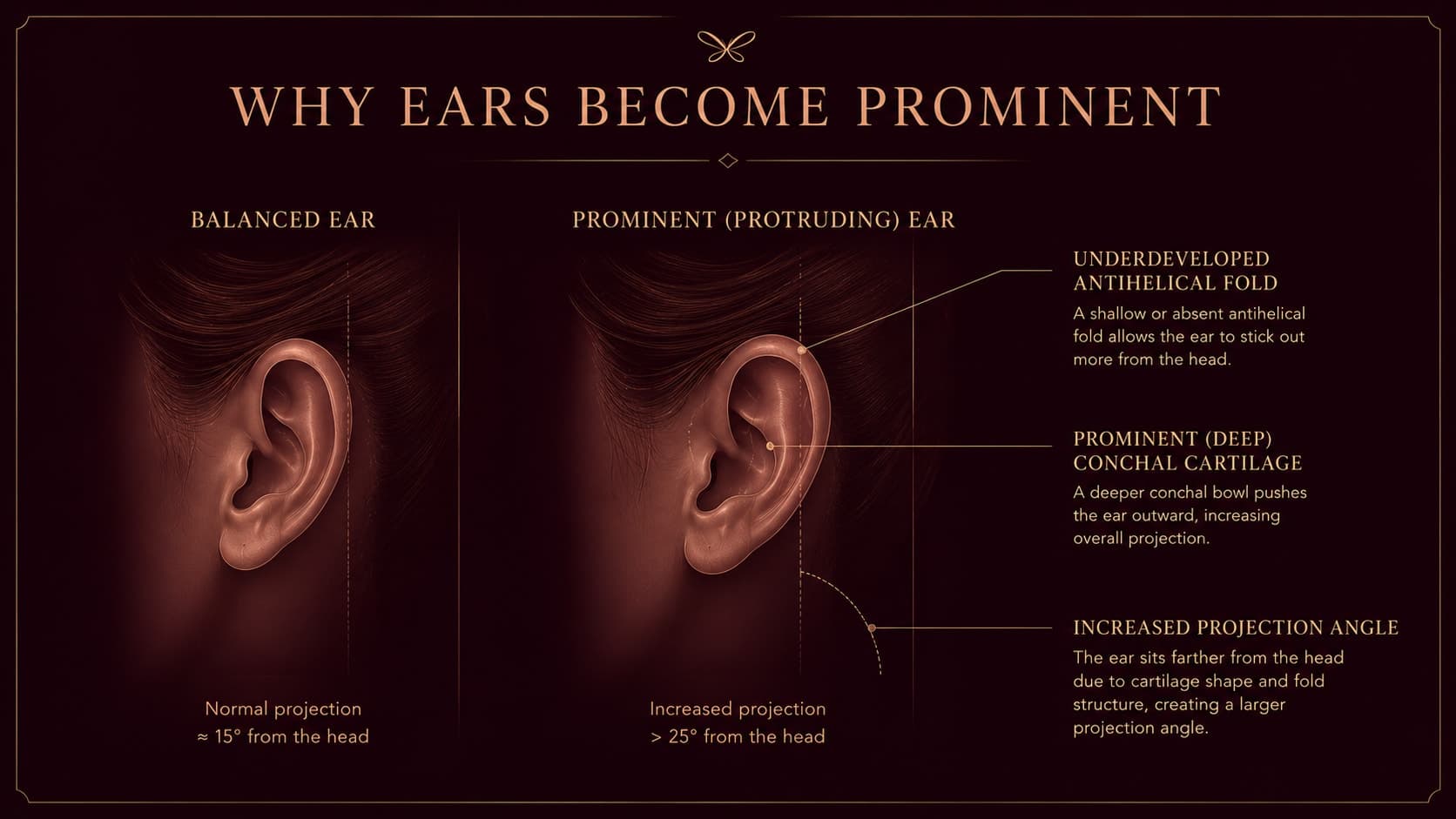
Otoplasty may improve
- Prominent or protruding ears
- Ear asymmetry
- Large or disproportionately projecting ears
- Certain congenital differences of the outer ear
Q: Does ear pinning affect hearing?
No. Otoplasty changes the position and shape of the outer ear; it does not affect hearing.
The Xynwell approach
How ear pinning is performed
Every otoplasty is individualized based on cartilage strength, ear shape, and facial proportions. A small incision is carefully hidden behind the ear within the natural crease, where it typically heals as a fine, inconspicuous line.
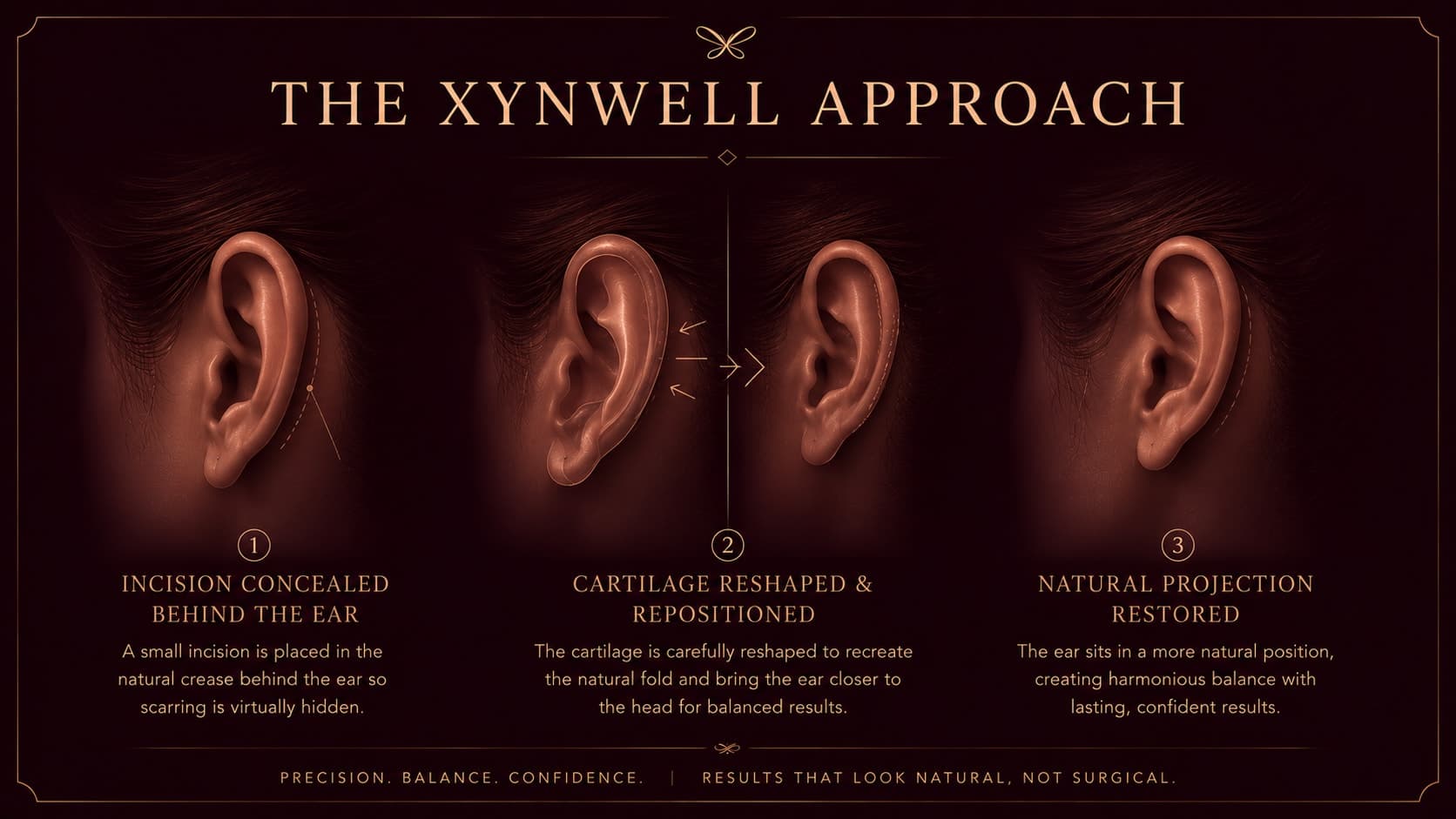
The goal is not simply to pin the ears closer to the head — it is to create ears that look proportionate, balanced, and naturally positioned.
Who is a candidate?
Many patients choose surgery because prominent ears affect confidence or draw unwanted attention. Others simply prefer a more balanced facial appearance. Every consultation includes an evaluation of ear shape, cartilage characteristics, facial proportions, and aesthetic goals to determine the most appropriate treatment plan.
For children
From about age five
Children are candidates once their ears have reached sufficient development — typically around age five or older — allowing correction before prominent ears draw unwanted attention.
For adults
At any age
Adults may choose otoplasty at any age — often to improve facial balance or address a concern they have lived with since childhood.
Recovery and what to expect
Postoperative instructions — including activity restrictions and headband use — are personalized for each patient and tailored to your healing.
- 1
First week
A protective dressing is worn immediately after surgery, followed by a lighter headband during early healing. Most patients return to work, school, or normal social activities within about one week.
- 2
Following weeks
Swelling gradually improves and the new ear position settles. Activity restrictions and headband use are personalized to your healing.
- 3
Following months
Final healing and scar maturation continue, leaving incisions concealed within the natural crease behind the ear.
Results
Naturally positioned, never “pinned back”
Otoplasty provides long-lasting improvement in ear position and facial balance. The ears appear naturally positioned rather than “pinned back,” and scars are typically concealed behind the ear.
Frequently asked questions
At what age can ear pinning be performed?
Most children become candidates around age five or older, once the ear has reached sufficient development. Adults may undergo otoplasty at any age.
Will the scars be visible?
Incisions are hidden within the natural crease behind the ear and typically heal as fine, inconspicuous scars.
Are the results permanent?
Otoplasty provides long-lasting correction. While cartilage naturally retains some memory, significant recurrence is uncommon.
Can adults have otoplasty?
Absolutely. Many patients choose otoplasty as adults to improve facial balance or address concerns they have had since childhood.
Can otoplasty be combined with other procedures?
Yes. Otoplasty may be combined with procedures such as earlobe repair and reduction or other facial procedures when appropriate.

Schedule a Consultation
Balance the ears. Enhance the face.
Every consultation begins with a detailed evaluation of your ear anatomy, facial proportions, and aesthetic goals. From there, we'll recommend the approach that will provide the most natural, balanced result for you or your child.