

Journal · Patient Education
Ptosis Repair: When Drooping Eyelids Affect Appearance, Vision, or Both
Patients with drooping upper eyelids often ask whether their ptosis is a cosmetic concern or something that affects their vision. Although both involve a lowered upper eyelid, the distinction depends on more than appearance alone. The key question is whether the eyelid simply changes how you look—or whether it actually interferes with vision.
What is ptosis?
Ptosis is the medical term for a drooping upper eyelid. It most commonly occurs when the muscle responsible for lifting the eyelid gradually weakens or stretches with age. Depending on its severity, ptosis may create a tired appearance, facial asymmetry, or interfere with the upper field of vision.
Understanding that difference helps determine the most appropriate treatment and surgical plan.
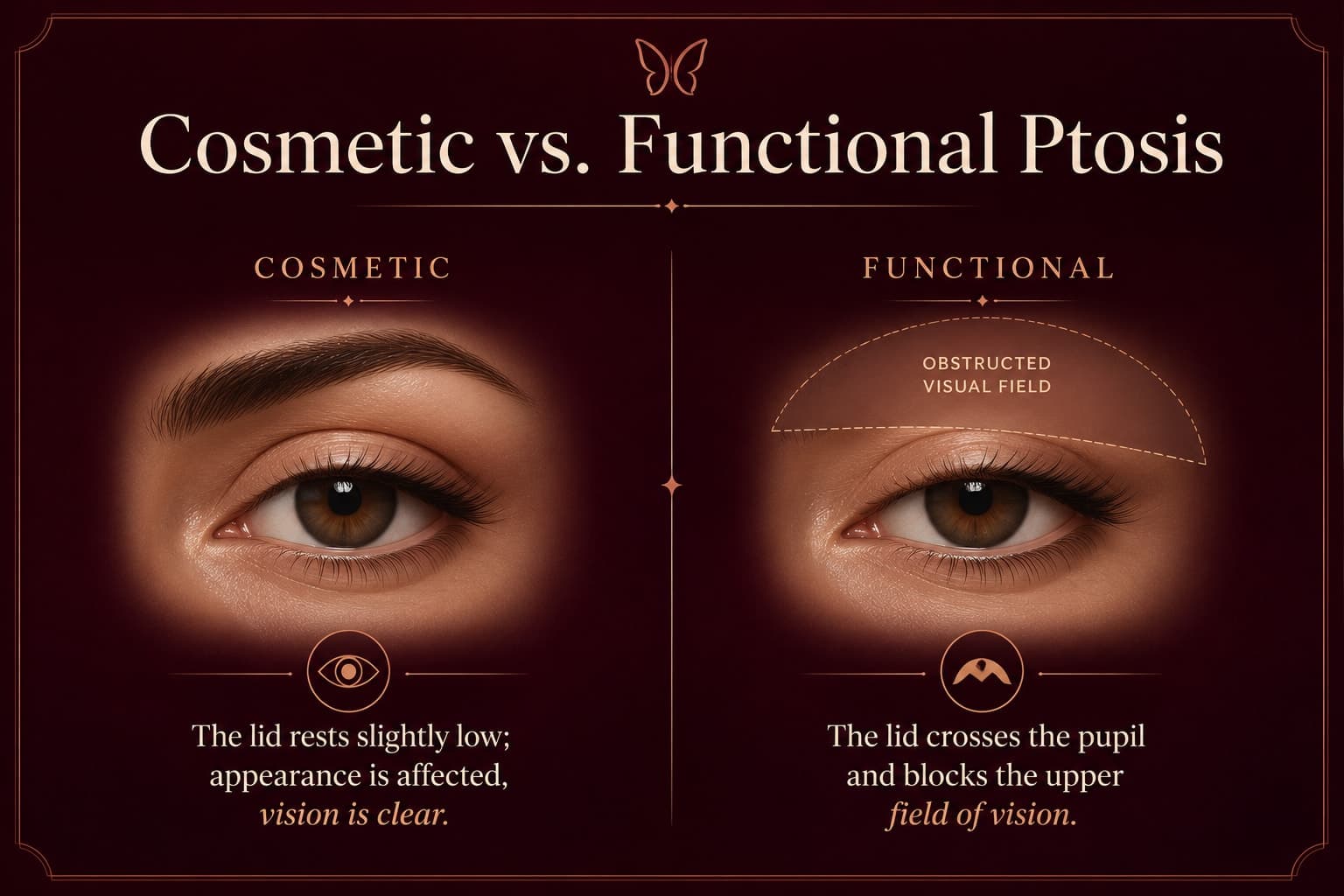
Cosmetic ptosis
Cosmetic ptosis affects appearance but does not significantly interfere with vision. Patients commonly notice:
- A tired appearance
- One eyelid sitting lower than the other
- Heavy-looking eyelids
- Facial asymmetry
Treatment is designed to restore eyelid position and improve facial balance while maintaining a natural appearance.
Ptosis that affects vision
Vision-affecting ptosis occurs when the eyelid droops low enough to block part of the upper visual field. Patients often describe:
- Difficulty reading
- Difficulty driving
- Trouble seeing overhead
- Constantly raising their eyebrows to see better
- Forehead fatigue or headaches from compensating
The goal of repair in these cases is to restore a comfortable field of vision while preserving natural eyelid movement.
How is the difference determined?
The distinction isn't made by appearance alone. A comprehensive ptosis evaluation typically includes:
- Eyelid position measurements
- Levator muscle function
- Brow position
- Facial symmetry
- Visual field testing when appropriate
These measurements help determine both the severity of the ptosis and the most appropriate treatment.
Appearance vs. Vision at a Glance
| At a glance | Cosmetic Ptosis | Vision-Affecting Ptosis |
|---|---|---|
| Primary concern | Appearance | Vision |
| Symptoms | Heavy or tired-looking eyelids | Blocked upper visual field |
| Common complaints | Asymmetry, tired appearance | Difficulty reading, driving, or seeing overhead |
| Treatment goal | Facial rejuvenation | Restore comfortable vision |
The Xynwell Approach
Treat the anatomy—not just the eyelid
A drooping eyelid is often only one part of the overall picture. Some patients also have excess upper eyelid skin, brow descent, or changes in facial balance that contribute to the appearance of heaviness. Understanding how these structures work together is essential for developing the most appropriate treatment plan.
Every evaluation begins with understanding your anatomy, your symptoms, and your goals before recommending surgery.
The best treatment is the one that addresses the underlying cause—not simply the visible symptom.
Why patients are referred to Xynwell
Patients are commonly referred to Xynwell for eyelid concerns that affect appearance, vision, or both, because distinguishing between them requires careful evaluation—not simply looking at the eyelid.
Whether the concern involves ptosis, excess upper eyelid skin, brow position, or a combination of factors, treatment recommendations begin with understanding the anatomy responsible for the symptoms.
For many patients, the greatest value isn't simply having surgery—it's receiving an accurate diagnosis and a treatment plan designed specifically for their anatomy.
Frequently asked questions
How do I know if my ptosis is affecting my vision?
A comprehensive eyelid evaluation measures eyelid position, muscle function, brow position, and, when appropriate, visual field testing. These findings determine whether the eyelid is affecting vision or appearance alone.
Can ptosis affect both appearance and vision?
Yes. Many patients have both vision changes and cosmetic concerns. Treatment planning considers both when recommending surgery.
Can excess upper eyelid skin and ptosis be treated together?
Yes. Excess skin (dermatochalasis) and ptosis frequently occur together and are often addressed during the same surgical procedure when appropriate.
What is recovery like after ptosis repair?
Most patients experience bruising and swelling for approximately one to two weeks. Eyelid position continues to refine as healing progresses over the following several weeks.

Schedule a Consultation
Appearance, vision, or both — the answer starts with a careful evaluation.
If you've noticed a drooping upper eyelid, changes in your vision, or a heavy appearance around the eyes, a comprehensive evaluation can determine the underlying cause and the treatment that's best suited to your anatomy. Xynwell welcomes patients from Scottsdale, Paradise Valley, Phoenix, Arcadia, Fountain Hills, and throughout the Valley.